Call for Applications (Poland)
Skip to...
Overview
Humanity in Action-Poland is now accepting applications from Polish and Ukrainian university students and recent graduates for the 2010 HIA summer fellowship programs in Germany, Poland, and the United States.
Polish candidates are eligible to apply for the Polish, German, and American Programs. Ukrainian candidates are eligible for the Polish and German Programs.
The German Program will take place in Berlin from June 3rd through July 4th, 2010. The Polish Program will take place in Warsaw during the same dates. The American Program will take place in New York from July 7th through August 9th, 2010. Sister programs will take place in Amsterdam and Copenhagen as well.
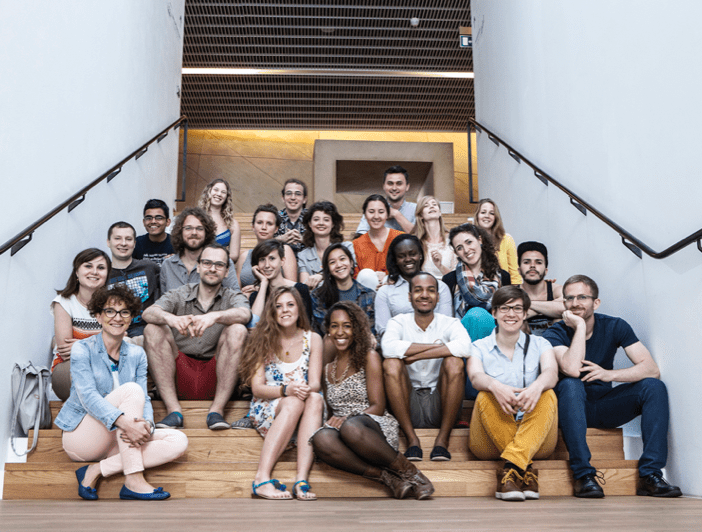
Intensive and demanding, the summer fellowship programs bring together international groups of college students and recent graduates to explore different national histories of discrimination and resistance, as well as examples of issues affecting different minority groups today.
Each program is highly interdisciplinary, and features daily lectures and discussions with renowned academics, journalists, politicians, and activists, as well as a significant number of site visits to government agencies, non-profit and community organizations, museums, and memorials. The programs seek to bridge the gap between theory and practice, and highlight different models of action to confront injustice.
The objective of the HIA summer fellowship is to facilitate a collective exploration of the social and political roots of discrimination, as well as to provide a forum where potential solutions can be considered and discussed. The programs are also intended to instill a responsibility among HIA Fellows to recognize and address the need to protect minorities and promote human rights—in their own communities and around the world.
To this end, HIA alumni are expected to participate in HIA's international network of Senior Fellows once their programs end—and to sustain their engagement in the issues addressed during the fellowship.
Polish and Ukrainian applicants must submit their online applications before February 21st, 2010.
Humanity in Action invites applications from Polish and Ukrainian university students and recent graduates interested in promoting human rights and social justice in their communities and around the world.
Eligible applicants are:
- Polish students (in their second semester at least) and recent graduates (no earlier than 2009)
- Ukrainian students (in their second semester at least) and recent graduates (no earlier than 2009)
- International students enrolled at Polish and Ukrainian universities on a permanent basis. (Please note that these students must be fluent in Polish or Ukrainian, and must have resided in Poland or Ukraine for several years.)
- Proficient in English.
- Not older than 27 years old.
Please note that short-term exchange students and doctoral students are not eligible to apply. HIA seeks applicants who are mature, proactive, self-reliant, experienced in grassroots activism, and comfortable in intensive group activity and interaction. All majors and academic disciplines are encouraged to apply.
If you have any questions about eligibility criteria, please contact Magda Szarota, HIA Poland Coordinator, at m.szarota@humanityinaction.org
Candidates may apply for more than one program, but can only be selected to participate in one of them.
Admissions to the HIA summer fellowship programs is extremely competitive. The first selection is made based on the written application, which must include a curriculum vitae, a personal statement, a response essay, and an action project proposal. Please make sure to check the application instructions and guidelines for further instructions.
Based on your written application, you may be invited for a personal interview with the admissions committee. The date and time of the interview will be communicated via email. Under extenuating circumstances, the committee may conduct interviews by telephone or Skype at its own discretion.
In these interviews, the admissions committee will examine the motivation, communication skills, and accomplishments of finalists. In general, final selections are made on the basis of demonstrated commitment to minority rights and social justice, evidence of leadership potential, significant academic achievement, and social maturity. Final decisions will be announced shortly after the interviews.
HIA does not discriminate on the basis of race or ethnicity, religion, political party, gender identity, sexual orientation, physical or financial ability.
The HIA Polish and German Programs are free of charge for Polish and Ukrainian participants. In addition, HIA covers the costs of accommodation, transportation, meals, and participation in program activities.
In the American Program, HIA covers the cost of accommodation, local transportation, meals, and participation in program activities. However, Polish Fellows selected to participate in the American Program will be responsible for financing the cost of airfare to and from New York. HIA will cover this cost only for participants with documented need. Polish Fellows in the American Program should also plan to bring spending money of approximately $500 for social activities and incidental costs.
Although the American and the European Programs in Berlin and Warsaw all promote team research and debate on human rights and social justice in democratic societies, the scope and focus of these programs differ slightly.
American Program in New York City
Program Dates: July 7 through August 9, 2010
As a nation of immigrants, constitutionally dedicated to the ideals of liberty and equality, the United States is one of the most diverse industrial nations in the world. It is also a nation whose commitment to diversity as a communal ideal is explicit and deeply rooted, albeit ultimately flawed. In the HIA American Program, Fellows study the economic, cultural, religious, and political resources available to those who advocate a more inclusive, equitable, and participatory society.
American Program Fellows explore the history of slavery, segregation, and immigration in the United States, as well as contemporary debates over race and ethnicity, the criminal justice system, immigration reform, religion, and the role of civil society. Past programs have included site visits to immigration hearings, community courts, community development corporations—traversing the New York City area from Brooklyn to Harlem to Newark, New Jersey.
HIA will select approximately 10 Fellows from American universities, who will be joined by a total of 15 Fellows from Denmark, France, Germany, the Netherlands, and Poland.
German Program in Berlin
Program Dates: June 3rd through July 4th, 2010
The German Program focuses on historical and contemporary human rights dilemmas in German society.
During the first few weeks of the program, Fellows meet with academics, journalists, activists, elected officials, and recognized leaders in human rights organizations.
In the second half of the program, Fellows develop a simulation game to be used in human rights education. An active learning process, the simulation game entails conducting extensive research in small international teams and engaging in role-play as a group. The larger aim of the simulation game is to understand the political and social dynamics underlying different conflict resolution strategies.
Polish Program in Warsaw
Program Dates: June 3rd through July 4th, 2010
The 2010 Polish Program is entitled “Poland: From Resistance to Taking Up an Active Stance” and will be divided into three parts:
1. Resistance: What Is Remembered, What Is Forgotten?
2. Taking a Stance: Trial and Error
3. Putting Theory in Action
The program emphasizes the legacy of the Communist era and its influence on contemporary Polish society and political culture. Program participants explore and discuss universal human rights problems in the national context of the Polish state and society through seminars, discussions, site visits, guided fieldwork, and written and oral reports. The program provides a platform for the exchange of ideas and experiences with human rights activists, academics, artists, and elected officials. The program will be conducted entirely in English.
In the second half of the program, Fellows divide themselves up in small international teams to research a pressing human rights issue in contemporary Poland. These teams must also prepare an innovative action to address the problem identified in their research. Within six months after the end of the program, the teams are expected to submit an essay on the topic of their research and action taken.
The program raises the following questions and issues:
- How do different societies process their past and determine what they remember and what they willingly forget, in this case the relevance of World War II, the Holocaust, Stalinism, and their influence on the collective memories of Poles and their national identity?
- What are the bulwarks against the disintegration of civil society, and the social mechanisms leading to stereotypes, discrimination, and dehumanization? How and why do some people resist to these phenomena, take actions, and eventually become heroes?
- What is the place of religion in the Polish public life and its identity-building role? To what extent are the rights of minority religious people respected?
- How do different societies use interpretations of the past to meet or avoid meeting present needs? What are some of the traces of the invisible minorities’ history at the local level (mainly in contemporary Warsaw)?
- Do minorities in one country have the right or obligation to judge and hold accountable minority issues in another country?
- How do we define who are minorities and what are their rights?
- How do nations incorporate universal values of human rights into their national goals and identity?
- How can an international network of engaged, young leaders provide models of collaboration through networks—formal and informal—in support of diverse democratic societies?
- The place of national and ethnic minorities in contemporary Polish society, and the role of the state in developing and maintaining their identity.
- The situation of newcomers: asylum seekers, undocumented migrants, and people with subsidiary forms of protection.
- The situation of homosexuals in Poland.
- The situation of the disabled and their ability or inability to live a “normal” life in Poland.
- The rights of women in the private and public spheres: domestic violence, discrimination in the labor market, human trafficking, and reproductive rights.
- Human rights in Polish foreign policy: dialogue between Poland and its allies in the EU and NATO on the situation in the East (e.g. Georgia or Ukraine).
- The Polish domestic system of human rights protection: the role of the state, NGOs and IOs, and the media.
The 2010 Polish and Ukrainian Fellows will have the opportunity to participate in a week-long, follow-up program in Washington, DC, in January 2011. This program will introduce participants to contemporary diversity issues in the U.S. The estimated costs of participation total about $1420 USD per fellow. Interested Fellows will be required to fund their participation in this program, though funding may become available.
HIA Obligations and Opportunities: After the Fellowship
Action Projects
As a requirement of participation, Fellows are obligated to conduct a hands-on outreach initiative—an “Action Project”—in their home communities. The initiative should reflect the HIA fellowship experience. Upon successful completion, Fellows are invited to become Senior Fellows and to join the global HIA network of young advocates.
Professional Fellowship Opportunities
Every year, HIA places more than 50 Senior Fellows in professional fellowship programs and internships to provide practical experience working on human and minority rights. Over 230 Senior Fellows have completed HIA-sponsored internships since 1999. HIA professional fellowship opportunities include the United States Congress, the European Parliament, the International Criminal Tribunal for the former Yugoslavia, and a wide variety of grassroots and community organizations in San Francisco.
Senior Fellows Associations
HIA Senior Fellows have organized themselves into Senior Fellows Associations in Bosnia and Herzegovina, Denmark, France, Germany, Poland, and the United States. These Associations have developed over the years into a global network of almost 1000 Senior Fellows worldwide, and they make it possible for Senior Fellows to collaborate on a number of important projects to promote a culture of human and minority rights.
For additional information on the HIA summer fellowship programs, or to reach out to Senior Fellows from Poland or Ukraine and ask about their experiences, please do not hesitate to contact us.
Humanity in Action Poland is part of an international non-profit consortium that organizes educational programs on domestic minority rights issues in democratic countries. The objective is to instill a strong sense of individual and collective responsibility to protect the rights of minorities and uphold democratic values. The programs are developed to inform emerging young professionals and leaders about minority issues, as well as to provide hands-on training for future human rights advocates and leaders.